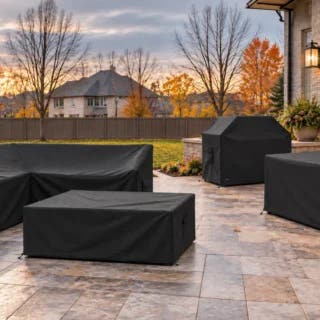
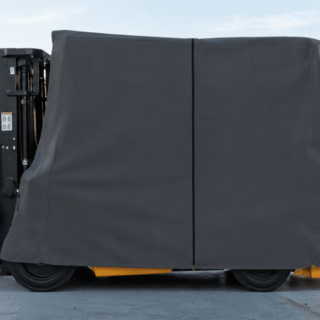
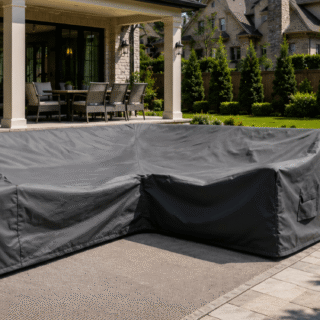

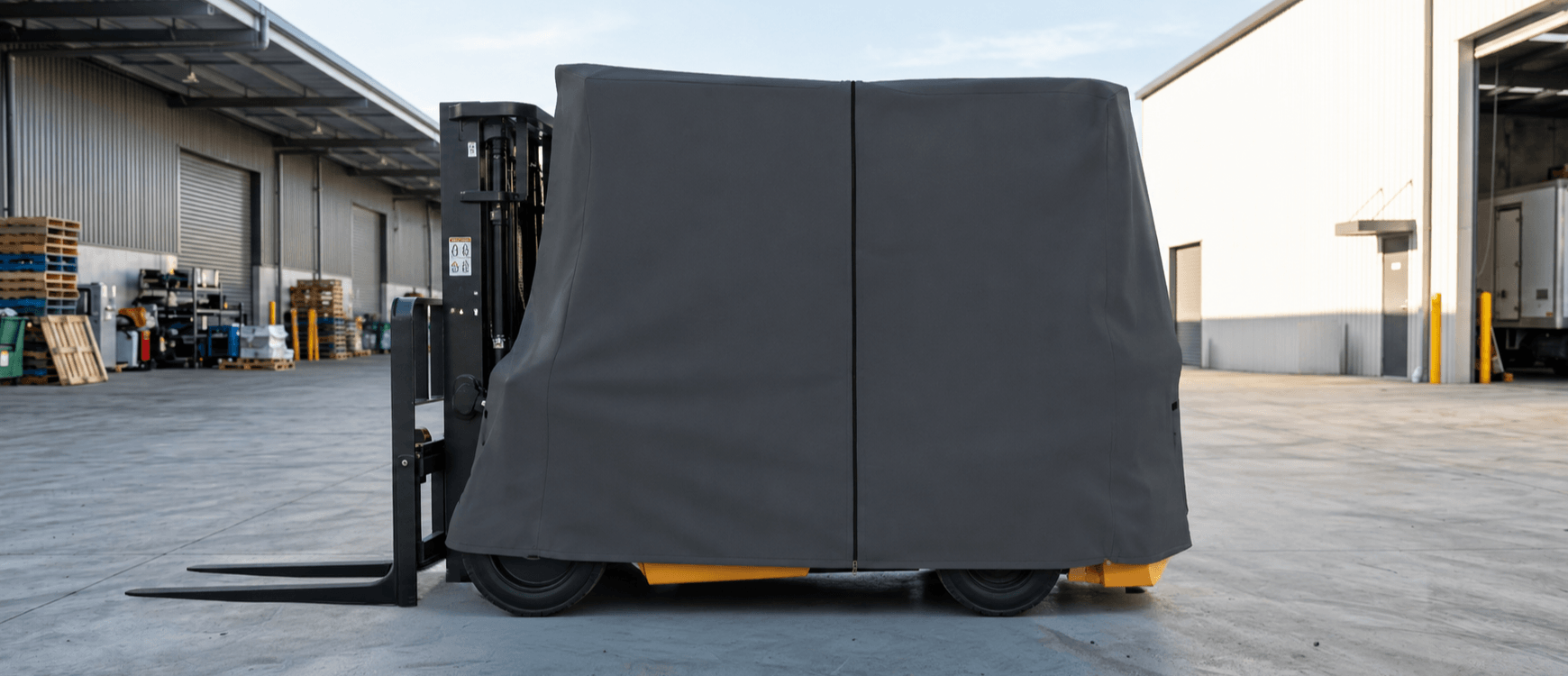
Drive by any construction site, farm, or industrial yard and you’ll see it everywhere: a small fortune in machinery just sitting there, exposed to whatever the sky decides to do that day, quietly rusting a bit more with each passing week. Nobody plans for it to happen this way. A piece of equipment gets parked between jobs, someone tells themselves they’ll get to it soon, and six months later it’s still sitting in the same spot, having weathered every storm and heat wave the season had to offer.
That’s really the whole case for industrial equipment covers. They’re not a nice-to-have add-on for people who like things tidy. They’re the difference between a generator that starts on the first try three years from now and one that’s fighting corrosion before its warranty even runs out.
Why Outdoor Storage Is Harder on Equipment Than People Expect
Most people underestimate how quickly outdoor exposure adds up. It’s rarely one dramatic storm that ruins a piece of machinery, it’s the slow grind of sun bleaching seals, moisture creeping into joints, and dust working its way into places it was never meant to be. \
Popular Products
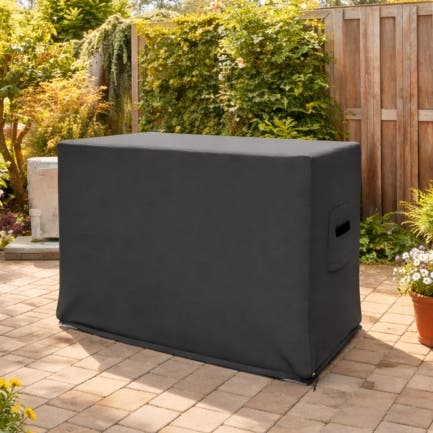
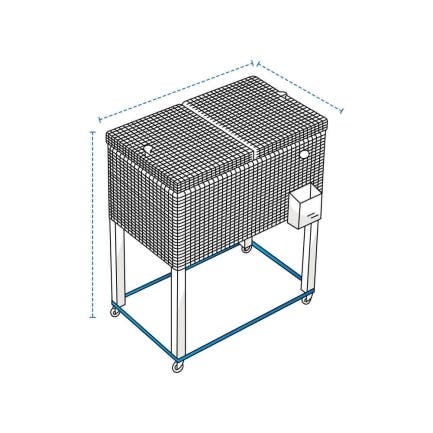
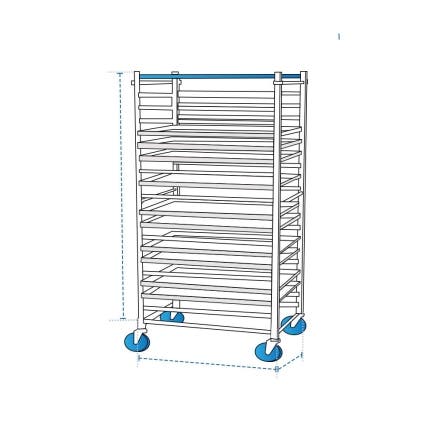
UV rays break down rubber gaskets and plastic housings faster than most owners realize. Rain and humidity get into electrical components and bearings, and once rust starts, it doesn’t really stop on its own. Even in dry climates, dust and debris build up in vents and filters, which strains motors that were never designed to fight through that kind of buildup every single day.
None of this shows up overnight. It shows up as a repair bill eighteen months later that traces back to a piece of equipment nobody bothered to cover.
What Actually Counts as a Good Outdoor Equipment Protection Solution
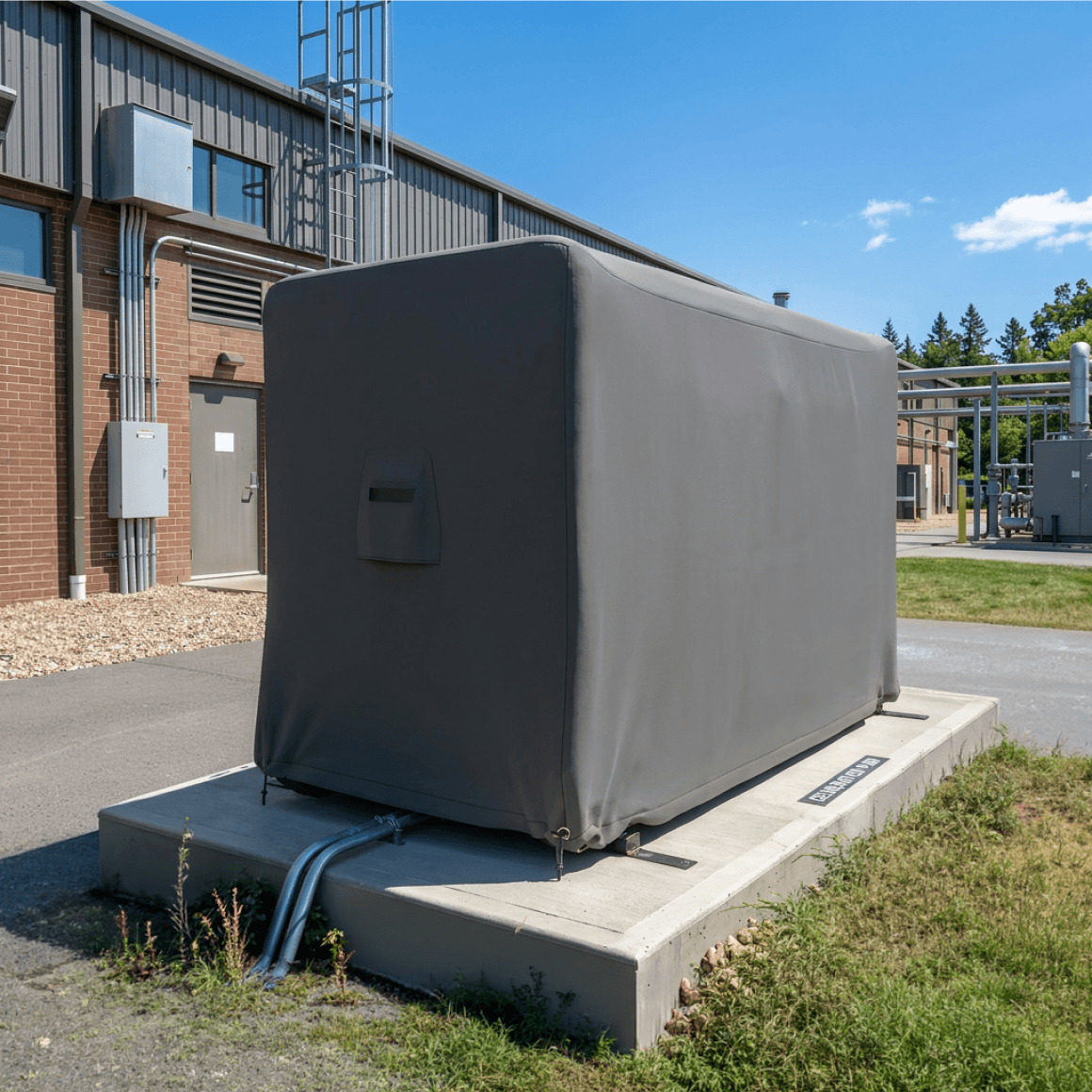
Not every tarp thrown over a machine counts as real protection. A tarp from the hardware store might keep rain off for a season, but it wasn’t built for the job, and it usually shows.
Real outdoor equipment protection solutions are built around a few things that matter more than people expect going in: fabric strength, UV resistance, breathability, and fit. A cover that traps moisture underneath can do almost as much damage as no cover at all, since condensation builds up in the exact spots you were trying to protect. That’s why the better options are vented or made from breathable material rather than a solid sheet of plastic.
Fit matters just as much. A cover that’s too loose flaps in the wind and lets rain in around the edges. One that’s too tight strains at the seams and wears through fast. This is where machinery covers built to the actual dimensions of the equipment earn their keep, generic sizing just doesn’t hold up the same way over time.
Heavy Duty Covers for Industrial Equipment: What to Look For
If you’re shopping for heavy duty covers for industrial equipment, a few features separate the ones worth buying from the ones you’ll replace in a year.
Fabric weight and construction come first. Look for reinforced polyester or vinyl-coated fabric rated for heavy outdoor use, not a lightweight tarp repurposed for a job it was never built for.
UV stabilization matters more in some regions than others, but anywhere with real summer sun, unstabilized fabric will crack and fade within a season or two.
Waterproof covers for industrial machinery need proper seam sealing and a water-resistant coating, since most leaks happen at the seams, not through the fabric itself.
Reinforced grommets and tie-downs keep the cover anchored in wind rather than becoming a sail. And ventilation, whether it’s mesh panels or vents, keeps moisture from building up underneath.
How to Protect Industrial Equipment Outdoors: A Practical Approach
Figuring out how to protect industrial equipment outdoors usually comes down to a handful of habits, not one big purchase.
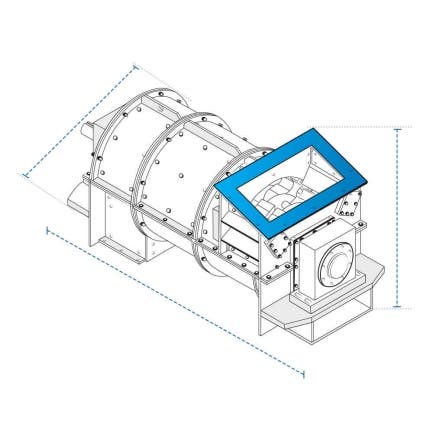
Start by measuring the actual equipment rather than guessing at a size. Odd shapes, attachments, and protruding parts all change what “fits” actually means. From there, match the cover material to your climate. Coastal areas need saltwater and corrosion resistance, colder regions need covers that won’t crack in freezing temperatures, and hot, dry climates need heavier UV protection than almost anything else.
It also helps to clean equipment before covering it. Trapping dirt, oil, or moisture under a cover just accelerates the damage you’re trying to prevent. And check the covers periodically. Even a well-made cover can shift in wind or wear at a stress point, and catching that early is a lot cheaper than replacing a machine part later.
Custom Industrial Equipment Covers for Long-Term Storage
Short-term coverage between shifts is one thing. Long-term storage is another problem entirely, and it’s where custom industrial equipment covers for long-term storage really prove their worth.
Equipment sitting idle for months needs more than a quick rain shield. It needs protection against sun, moisture, pests, and temperature swings all at once, for an extended stretch. Custom equipment covers built specifically for long-term storage tend to include heavier fabric, reinforced stress points, and better ventilation, since they’re doing a harder job over a longer period than a cover meant for daily use.
Generator covers are a good example of where this matters. A generator that only runs during outages or peak season can sit unused for most of the year, and that’s exactly the kind of equipment that suffers most from being left exposed without proper protection.
Common Mistakes People Make with Outdoor Equipment
A few habits show up again and again with equipment left outdoors: using a cover that’s the wrong size instead of one built for the specific machine, skipping ventilation and trapping moisture underneath, buying the cheapest fabric available instead of something rated for the job, forgetting that covers wear out and need periodic replacement, and assuming a garage or lean-to alone is enough without a proper cover underneath it.
None of these mistakes are complicated to avoid. They just take a bit more attention upfront than most people give them.
Why Waterproof Outdoor Covers Are Worth the Investment
It’s easy to look at a quality cover and think it’s an unnecessary expense for something that’s “just sitting outside anyway.” But waterproof outdoor covers pay for themselves fast once you compare their cost against a single repair bill for water damage or rust remediation.
Equipment protected properly holds its resale value better too. A machine that’s spent years under a proper cover looks and runs differently than one that’s been left exposed, and buyers notice that difference immediately.
Final Thoughts
Protecting industrial equipment outdoors isn’t complicated, but it does take more intention than most people give it. The gap between equipment that lasts and equipment that fails early usually comes down to something as simple as whether it was covered properly and consistently.
Whether you’re storing a single generator over the winter or protecting a full yard of machinery year-round, investing in the right industrial equipment covers is one of the cheapest forms of insurance available for expensive equipment. It’s a lot easier to buy a good cover now than to replace a machine later.
Recent Comments