
A pool cover that doesn’t fit right causes more problems than people expect. Gaps let debris in, loose edges flap around in the wind, and a cover that’s too tight just won’t stretch over the deck hardware at all. Most of these headaches trace back to the same root cause: a sizing mistake made before the order was even placed. Here are the common pool cover sizing mistakes and how to avoid them, so your next cover does its job.
Mistake #1: Guessing Instead of Measuring
The most frequent mistake is simply estimating pool dimensions instead of measuring them properly. A pool that “looks like” 16×32 feet might be a foot off in either direction, and that’s more than enough to throw off a cover’s fit.
Popular Products
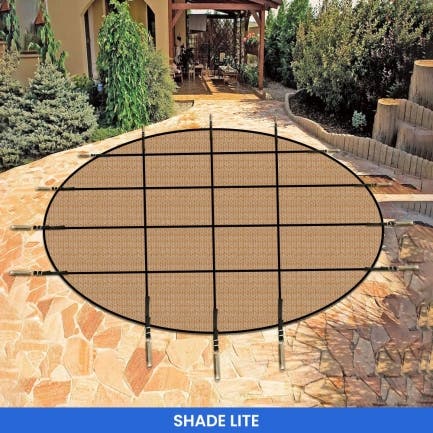
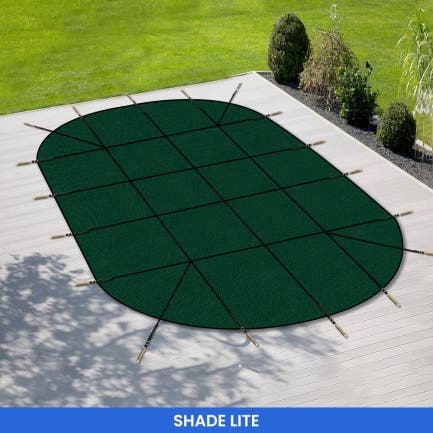
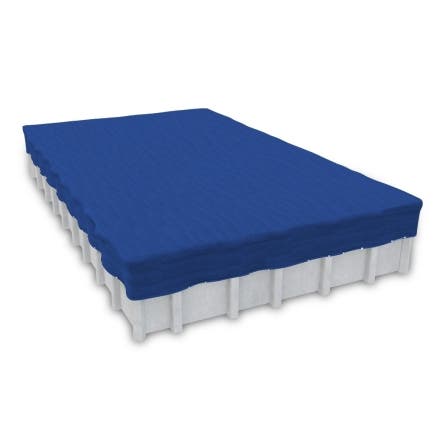
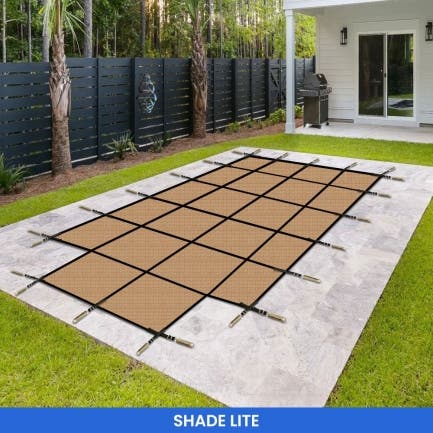
How to avoid it: Always measure rather than guess, even if you think you already know your pool’s size from when it was installed. Pools settle, decks shift, and old paperwork isn’t always accurate. Knowing how to measure a pool cover correctly starts with treating your own pool as an unknown quantity until you’ve put a tape measure to it yourself.
Mistake #2: Forgetting About Steps, Ladders, and Deck Type
Pool covers aren’t just sized to the water’s edge — they need to account for steps, ladders, and the type of deck surrounding the pool. Skipping this detail is one of the most common mistakes to avoid when buying a pool cover, and it usually only becomes obvious once the cover arrives and doesn’t sit flush.
How to avoid it: Note the location of steps (centre, left, right, or none) before you order, and confirm whether your deck is concrete, wood, or grass, since the anchoring hardware differs between them. Getting this right the first time saves a frustrating return-and-reorder cycle.
Mistake #3: Not Accounting for Leeway
Some people measure their pool’s exact edge-to-edge dimensions and order a cover to match those numbers precisely — only to find it’s nearly impossible to pull on and off. A cover with zero leeway will fight you every time you try to install or remove it.
How to avoid it: Reputable cover makers build in a small amount of extra leeway, usually a few inches, specifically so the cover can be handled easily without being baggy. When measuring, follow the manufacturer’s guide rather than rounding down to the tightest possible fit — this is one of the simplest pool cover fit problems and solutions to apply.
Mistake #4: Assuming Every Pool Shape is the Same
Round, oval, Grecian, L-shaped, kidney — pool shapes vary a lot, and treating an irregular shape like a simple rectangle is a quick way to end up with a cover that bunches at the corners or leaves gaps along curved edges.
How to avoid it: Identify your pool’s actual shape before measuring, and if it doesn’t match a standard template, look for a maker that offers true custom shaping rather than a “close enough” stock size. This is exactly where custom pool covers for perfect fit earn their reputation — a cover built around your pool’s real outline, rather than a generic shape, eliminates most of the gap and bunching issues people run into.
Mistake #5: Overlooking Safety Requirements
If keeping children or pets out of the pool is part of why you want a cover, sizing mistakes here carry more weight than just an awkward fit. A cover that’s slightly undersized or improperly anchored can leave a gap large enough to be a real hazard, not just an eyesore.
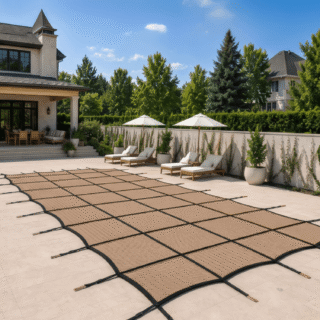
How to avoid it: If safety is the priority, look specifically at safety pool covers designed and rated for that purpose, rather than a standard leaf or debris cover. These are engineered with tighter mesh, secure anchoring points, and weight-bearing specifications that solid or decorative covers simply don’t have. Sizing for a safety cover should always favour a tight, gap-free fit over a loose, “easy on and off” one.
How to Measure a Pool Cover Correctly
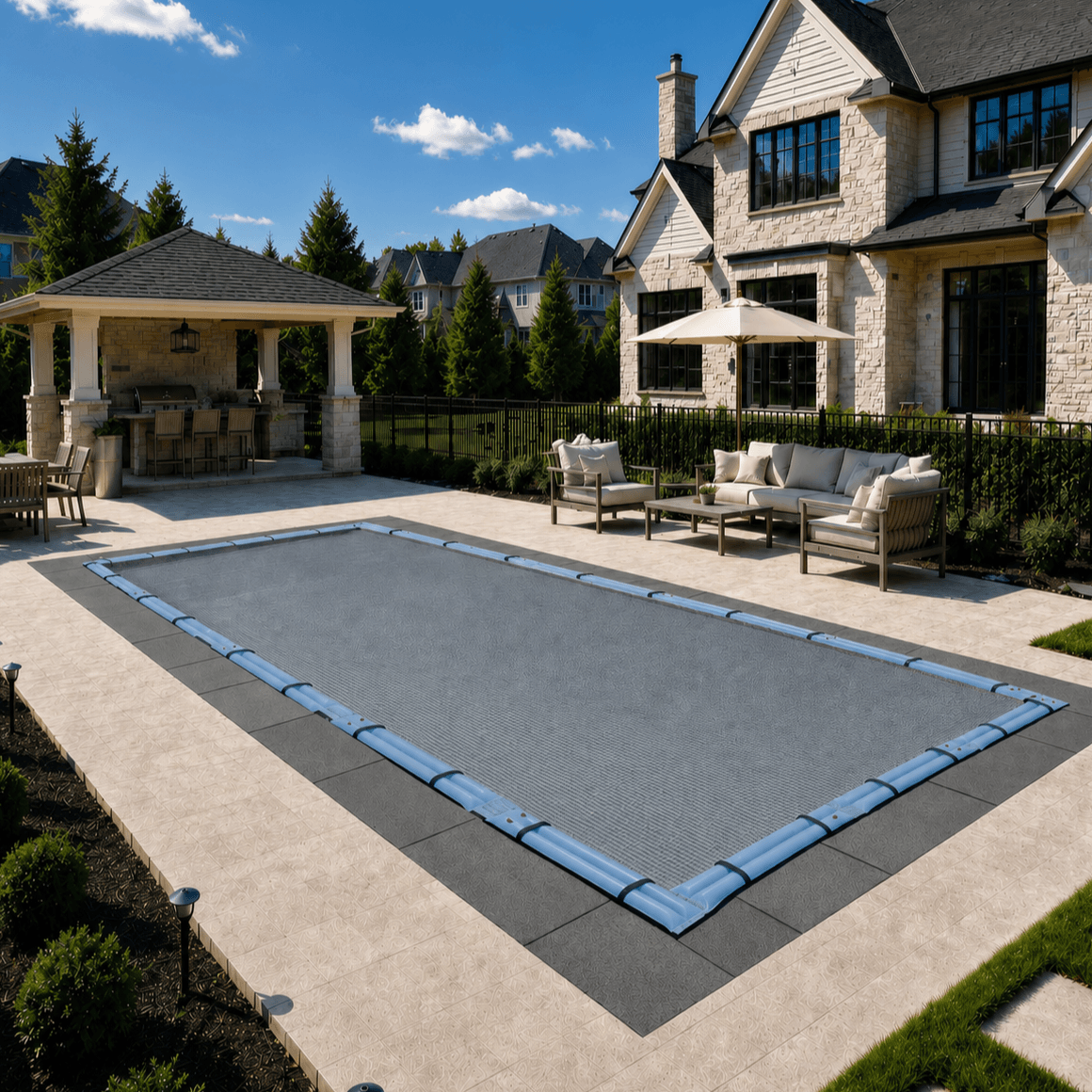
Since so many sizing mistakes start at the measuring stage, it’s worth slowing down here. A solid pool cover measuring guide for homeowners should cover at least these basics:
- Measure edge to edge, following the pool’s actual outline rather than the surrounding deck.
- Measure at the widest and longest points for irregular shapes, then note where the shape narrows or curves.
- Record step location and dimensions separately, since these often need their own measurements.
- Check for any deck obstructions — ladders, rails, or fixtures that the cover will need to work around.
- Double-check your numbers before submitting an order, since most made-to-measure covers can’t be easily resized after production.
Measuring a swimming pool for a custom cover isn’t complicated, but it does reward patience. Taking ten extra minutes with the tape measure is far cheaper than ordering twice.
Final Thoughts
Most pool cover sizing problems come down to skipped steps — not measuring carefully enough, forgetting about steps or deck type, or assuming a shape that doesn’t quite match reality. Whether you’re shopping for custom pool covers, rectangular pool covers, mesh pool covers, or dedicated safety pool covers, taking the time to measure properly and account for your pool’s real shape and features will save you from the fit problems that send most covers back for a remake.
Recent Comments