


Ask ten Canadians when they put their patio furniture away for the season and you’ll get ten different answers — somewhere between “the day after Thanksgiving” and “whenever the first real snow hits.” Truth is, there’s no single date that works from Victoria to Halifax. But there is a smarter way to think about timing than just guessing based on the calendar.
Get the timing wrong and you’re either covering furniture that’s still getting good use in a mild October, or leaving it exposed through the first hard frosts of November while you wait for “official” winter to arrive. Neither is ideal. Here’s how to time it right, wherever you are.
Forget the Calendar — Watch the Temperature
The real trigger isn’t a date on the calendar, it’s a pattern: once overnight temperatures are consistently dropping below freezing, it’s time. A single cold snap doesn’t mean much — Canadian falls are full of them, followed by a stretch of mild, sunny days perfect for one last dinner outside. What matters is the shift from occasional frost to nightly frost.
That pattern typically shows up in early-to-mid October across the Prairies and much of Ontario and Quebec, later in the month along the coast in BC, and can arrive as early as September in parts of Atlantic Canada and the North. Rather than picking a fixed date, keep an eye on the ten-day forecast once fall sets in — when nighttime lows are consistently sitting near or below zero, that’s your window.
Why the Timing Actually Matters
It’s tempting to leave everything out until the last possible moment, especially if you’re still using the space. But freeze-thaw cycles are harder on outdoor furniture than steady cold ever is. Moisture gets into wood grain, metal joints, and cushion fabric during a mild afternoon, then freezes and expands overnight. Do that a dozen times before you finally cover things, and you’ve done more damage than an entire month of proper winter.
This is where good patio protection earns its keep — not just in deep winter, but through that unpredictable shoulder season when the weather can’t make up its mind.
Clean Before You Cover — Every Time
Whatever the calendar says, don’t cover furniture that hasn’t been cleaned and dried first. Sealing in dirt, pollen, or dampness under a cover is one of the fastest ways to end up with mildew by spring, regardless of how good the cover itself is. A quick wash, a full dry in the sun, and only then the cover goes on.
Match the Cover to the Piece
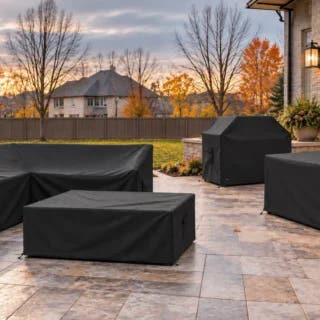
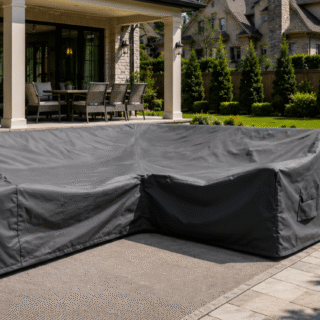
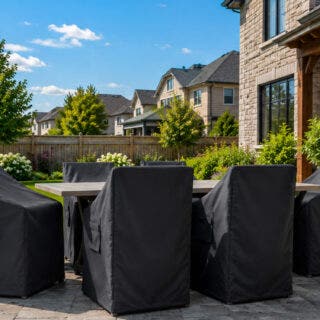
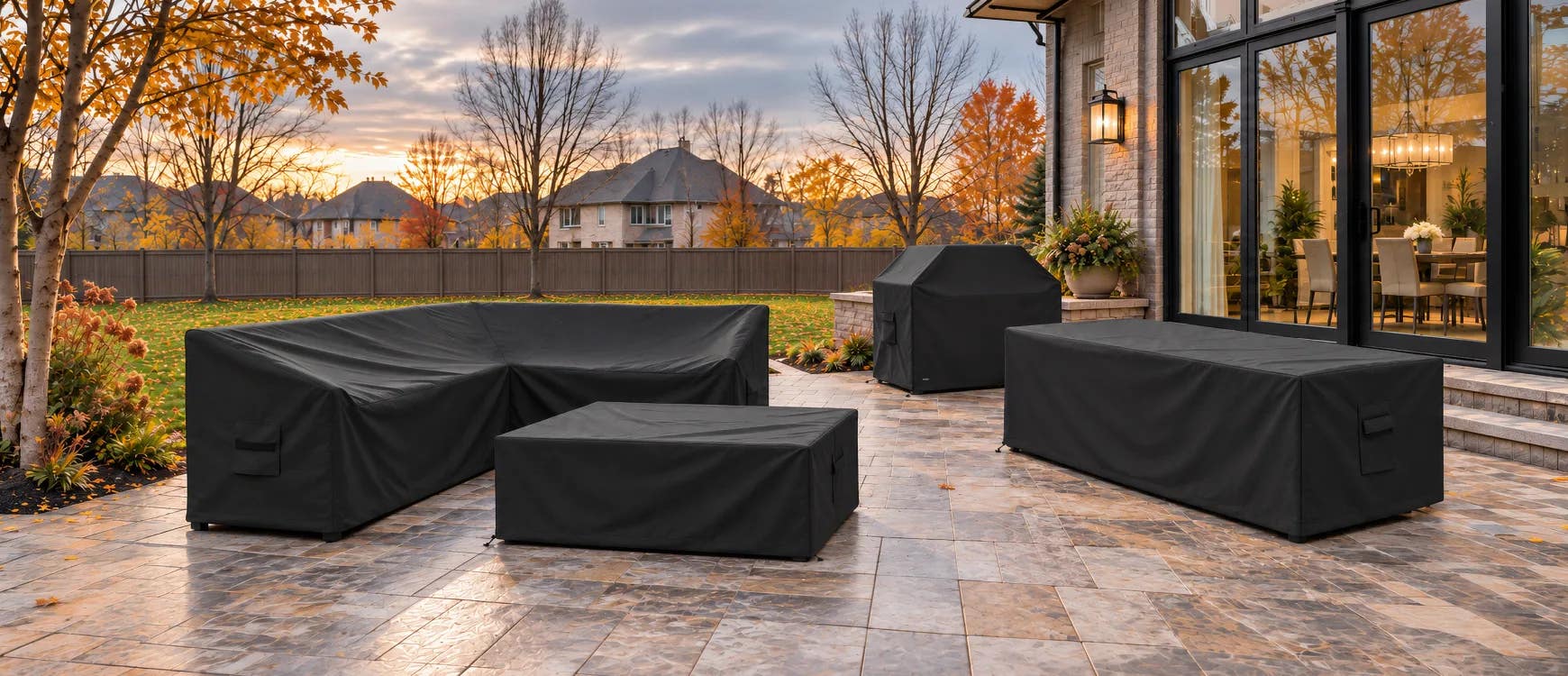
Not all outdoor furniture needs the same approach. Sectionals and larger seating groups benefit from a properly fitted sectional couch cover rather than a generic tarp — loose coverage leaves gaps where wind-driven snow and rain get in, which defeats the purpose entirely. For standard sets, well-fitted patio furniture covers sized to your actual pieces will outperform anything oversized “just in case.”
If you have an outdoor kitchen setup, don’t leave it for last. Grills are often the most neglected piece, mostly because people assume metal can handle anything. It can’t — moisture works into vents and hardware just as easily as it does anywhere else. A dedicated grill cover prevents rust from taking hold over the winter months, and for a full setup, matching outdoor kitchen covers protect countertops and storage components that are far pricier to replace than a grill grate.
Don’t Wait for the First Snowfall
Snow itself isn’t actually the enemy — dry snow sitting on a well-covered piece of furniture does relatively little harm. It’s the freeze-thaw stretch beforehand, combined with rain and damp cold, that causes most of the wear. Waiting for the first snowfall as your cue means you’ve likely already missed several weeks of the exact conditions your furniture needed protection from.
A Simple Rule of Thumb
If you’re unsure, here’s the shortcut: once you’ve stopped sitting outside comfortably in the evening — when it’s the cold, not the mosquitoes, keeping you inside — it’s time to start covering up. Your outdoor living space doesn’t need to be tucked away all at once, either. Move cushions and anything fabric indoors first, since they’re the most vulnerable, then cover the frames and hardier pieces as the nights get consistently colder.
Get ahead of the freeze-thaw cycle rather than reacting to the first storm, and what you uncover next spring will look like what you put away — not something you’re replacing.


Recent Comments